- Home
- Packaging guide
Valuable item
How to pack a valuable item
Without suitable packaging, even if the courier is careful, transport can cause damage to your valuable item. This page outlines the steps to protect a valuable item before transport.

Why packaging is essential
An object that’s not well protected can arrive scratched, damaged, or broken, even if the carrier is as careful as possible.
With Cocolis, your items travel with individuals or professionals on journeys they're already making. They are handled during loading, in transit, and unloading—each a moment where good packaging makes all the difference.
An object can arrive scratched, broken, or incomplete. These situations are rare but avoidable and almost never happen when an item is properly packed from the start.
Prepare your valuable item before packing
Photograph the item—painting, sculpture, antique furniture, ceramic or bronze—from several angles before packing. These photos are essential proof of its initial condition if there is any dispute. If the item is made up of several parts, like a base, lid or detachable elements, wrap each one separately. For antiques, pay special attention to areas weakened over time: dry wood, old joints, cracked varnish, or delicate gilding.
This type of item is common when buying from flea markets, an antiques dealer or at an auction house (purchased on Interencheres and delivered by Cocolis thanks to our partnership, etc.).
This is also a good moment to gather your materials and plan the right protection for each part. Good packaging preparation happens before you start, not as you go along.
Steps to pack a valuable item
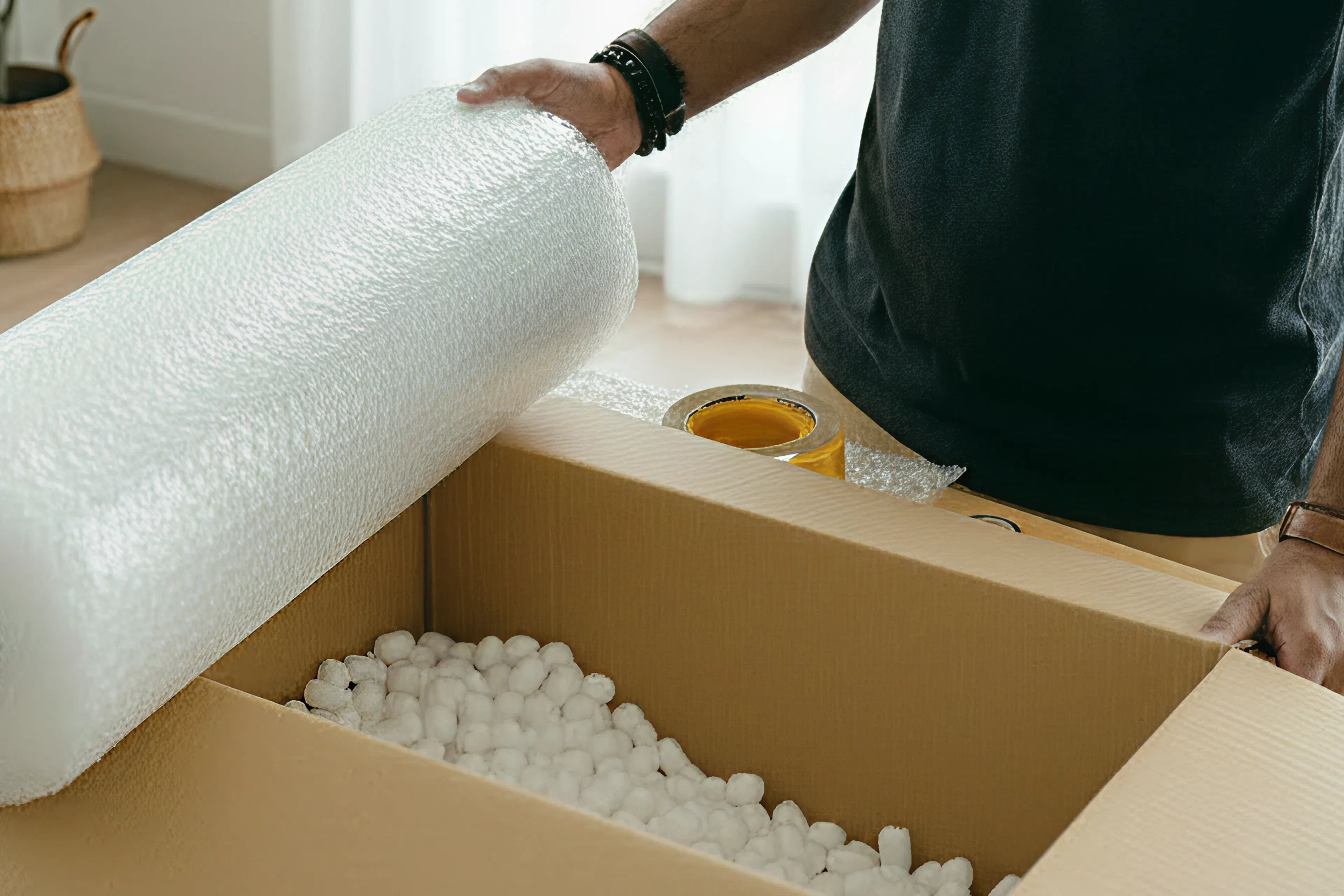
- First, protect the visible surfaces and the most fragile areas: apply an initial layer of bubble wrap directly onto the delicate parts, with the bubbles facing inward for a soft touch—whether it's a painting, sculpture, bronze, ceramic or antique piece.
- Add a layer of sturdy cardboard on top to absorb impacts and prevent direct pressure.
- Place the item in a box suited to its size—not too big, not too small. Fill all empty spaces with crumpled paper, rolled bubble wrap, or foam to keep it completely immobile.
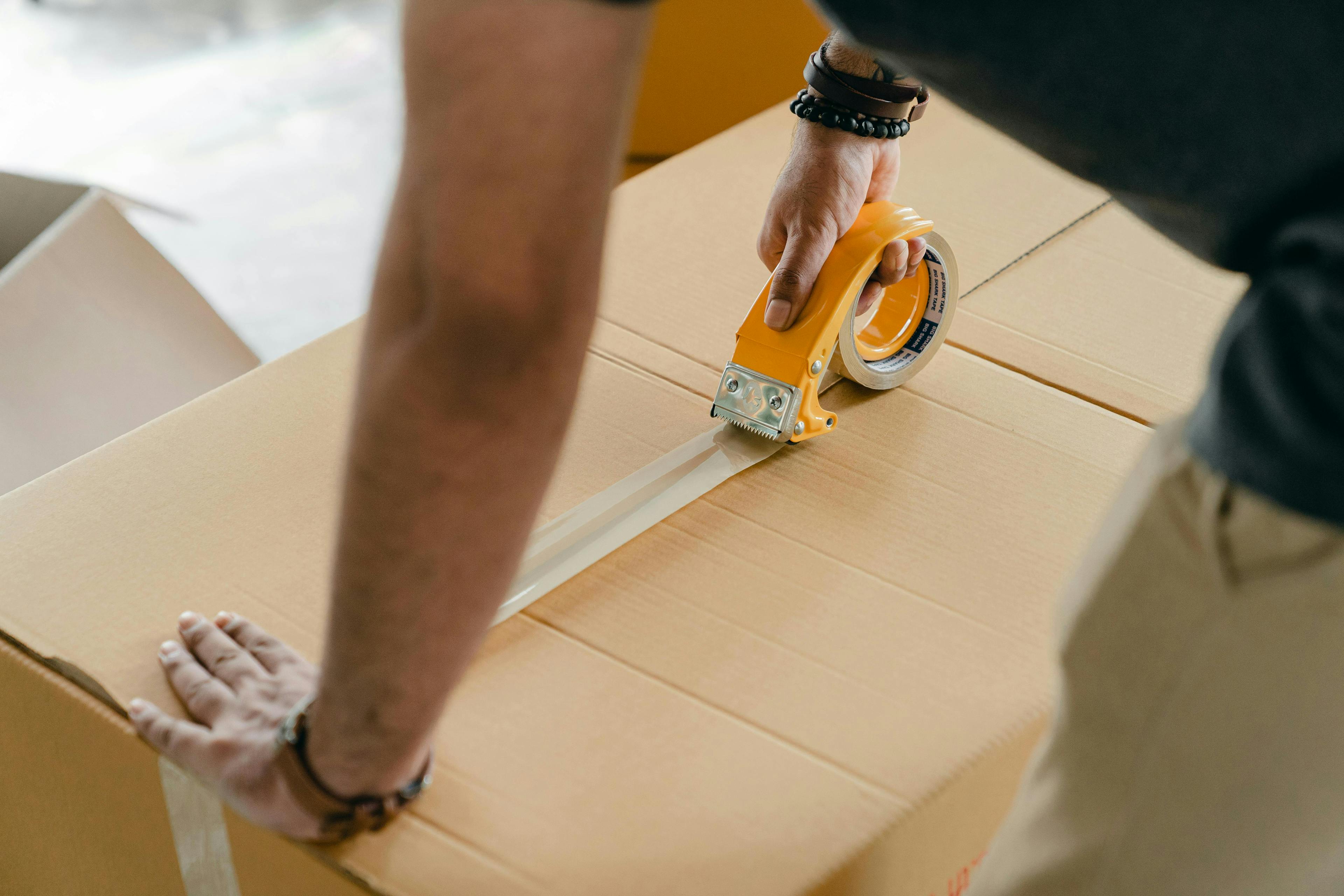
- Seal the box and reinforce all the edges with tape.
- Mark “FRAGILE” on every side of the box.
Good habits to know
The essential points to avoid problems during transport

Adapt packaging to the item
Packaging isn’t universal. Take into account the fragility, weight, and shape of your valuable item to choose the right protection – the main thing is that the item is well protected during transport.

Don’t seal the packaging too soon
Leave your valuable item visible when the courier arrives. They must be able to check its condition before taking charge and take photos with and without protection. Seal the packaging only afterwards.

Take photos before shipping
Photograph your item before and after packing. In case of a problem, these photos are your only evidence of its initial condition.

Inform about special requirements
Some items have specific requirements: must be kept upright, particular handling direction, extra fragility. Clearly inform the courier about these before departure.

Never stick tape on surfaces
Brown tape can leave marks or damage finishes. Never stick it directly to an item – always use an intermediate layer.
Frequent mistakes & things to watch out for
Some mistakes happen regularly and explain most damage on arrival.
For a painting, sculpture or any collector’s piece, the aim is not just to prevent breakage, but to preserve its condition down to the smallest imperfection—even a scratch, chip or mark can significantly lower its value. Avoid any direct pressure on surfaces, no matter how slight. If you have any doubt about the strength of the packaging, add an extra layer of protection rather than take the risk.
Transporting valuable item with Cocolis
Simpler, more human transport
With Cocolis, your item doesn't go through a warehouse, isn't passed from hand to hand and doesn't endure multiple re-loadings. It's delivered directly from point A to point B, in a single trip, by an individual or professional already making the journey.
In reality, it’s often someone like your neighbour or cousin making the trip for their own reasons who takes special care of what they're carrying. It's not a courier under pressure to deliver dozens of parcels a day. This difference means a lot in how your item is handled.
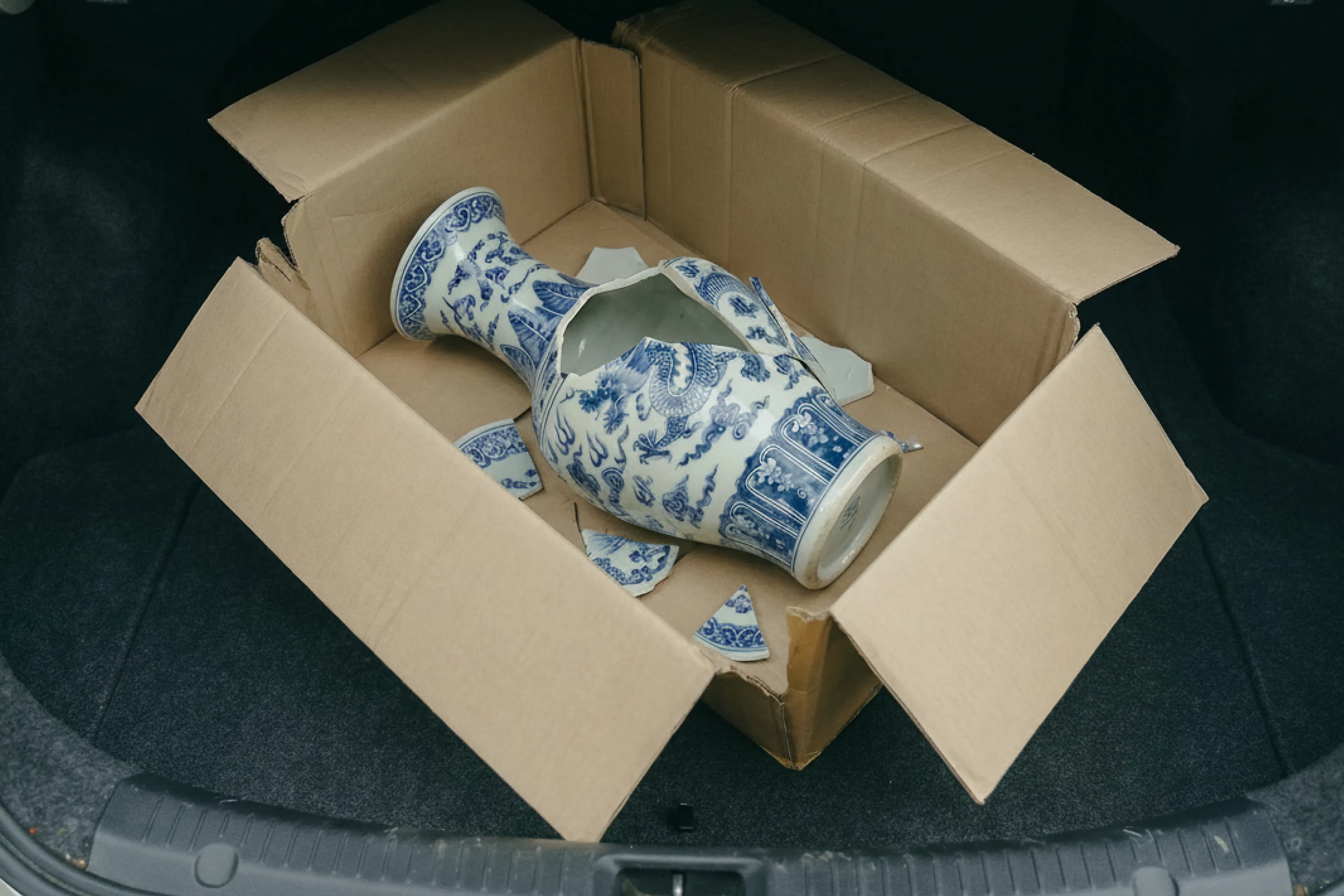
Fewer handlings also means less risk. But your item will still be loaded and unloaded, and a sudden brake can happen: correct packing is still essential to protect sensitive areas at these key moments.
Practically, packing doesn't need to be designed to withstand a whole logistics chain. It just needs to provide effective protection for a single journey—which is achievable by everyone.
Frequently asked questions
The person sending the item is usually responsible for ensuring it’s properly packed before transport.
However, if you’re the recipient of a second-hand purchase, you requested delivery via Cocolis, and you want the sender to pack your valuable item, ask them explicitly and clarify your expectations: protection for surfaces, corners and fragile parts.
The sender is not automatically responsible—a clear request beforehand prevents misunderstanding.
If you can’t pack yourself, mention it in your Cocolis listing and alert the transporter in advance. Some co-transporters might help, but there’s no guarantee. In most cases, the simplest solution is to ask the sender to properly prepare the item before transport.
No. The courier must be able to see your valuable item before sealing the packaging, to check its condition at the start. This is important: if damage is reported at delivery, photos taken at this point prove the item was in good condition and correctly packed initially.
Best practice: prepare packaging beforehand, keep the item visible for the courier’s arrival, take photos together before and after sealing, then close the packaging.
Photos serve as proof if there’s a problem. They show the state of your valuable item before shipping and prove the item was properly packed.
Without photos, it’s difficult to demonstrate where damage came from and to get compensation.
Take photos before packing, after packing, and on receipt, to document any issue that may occur during transit.
Yes, but only if certain conditions are met: your valuable item must be suitably packed with sensitive parts protected, photos must be taken before and after packing and at delivery, and a Cocolis insurance policy must be purchased when booking.
Without insurance, or if packaging is insufficient, or you don’t have proof of the item's condition before and after transport, your claim may be refused.
To find out more about coverage conditions, visit our parcel insurance page.
If something happened, you can follow the process to declare a claim on Cocolis.
Other packing guides
For further advice, you can review packing guides for different types of item.
Send a valuable item with no nasty surprises
Post your listing in minutes and receive transport offers suited to your item.